

Patient Co-Design: Why Getting It Right Is Trickier Than You Think (And Why That Matters)
- Pam Stoik

- Oct 15, 2025
- 4 min read
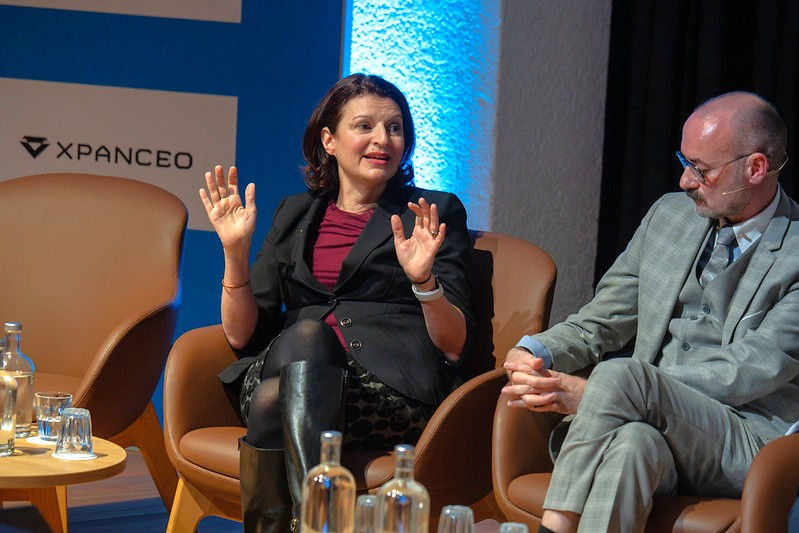
Fresh off being a panelist at The Economist Impact Future of Health Europe in London and the Mayo Clinic School of Continuous Professional Development Care that Fits Conference in Paris, I'm buzzing with one clear takeaway: healthcare is finally asking hard questions about patient-centered care. But asking the questions and getting the answers right? Two very different games.
The Wake-Up Call
At the London conference, one panelist was discussing how technology could help give patients the tools and information they need to improve self-management. The response of another gentleman on the same panel stopped me in my tracks: "But do patients really want to be empowered to take control of their health?"
Wait. What?
This question assumes patients are somehow bystanders in their own care. That empowerment is optional. That involvement is a preference, not a right.
This mindset—however well-intentioned—is exactly why patient co-design can result in an eye-roll at best and angry disillusionment at worst.
As the authors of Mitigating unintended consequences of co‐design in health care note: "Undertaking a co‐design approach without the optimal conditions for inclusive involvement by all may not result in an equal partnership or improve health or care quality outcomes. Co‐design requires on‐going reflective discussions and deliberative thinking to remove any power imbalances."
But here's what concerns me about that panelist: I know for a fact that his mindset represents a certain faction in healthcare who still see patients as passive recipients rather than active partners.
There is good news though: at both conferences, I heard the majority of providers, founders, and policy makers highlight the importance of bringing diverse groups to the table, engaging patients early and often, and ending the "parental" mode of healthcare. But that one question? It shows how much work remains.
Care That Fits and Co-Design
In Paris, I presented my own patient journey to "care that fits" and shared co-design work from the GBS/CIDP Foundation of Canada, including communication cards developed with patients, not for them. The distinction matters.
Both conferences reinforced that healthcare globally is ready for transformation. From AI applications to environmental sustainability to prevention strategies, the conversations were wide-ranging and deep. But when it came to patient co-design, some common truths emerged:
👉 "Fit" is life-stage dependent.What works for a patient at one point in their life might not work at another. Co-design has to account for real life, and individualism, not theoretical convenience.
👉 Honouring patient preferences also means incorporating system flexibility. True "fit" also means providers need time, autonomy, and organizational support. Co-design without systemic change will create an unsustainable and hollow end result.
👉 Risk tolerance matters. Patients are more willing to try new approaches when reverting back isn't a bureaucratic nightmare. If your co-design doesn't address red tape, you're only solving half the problem.
👉 Building a partnership of trust means leading with humanity. Yes, "the best people with the best education" are great, but genuine trust is created when medical providers lead with humanity, not credentials. This starts with empathy and active listening: according to one presentation, 44% of appointment conversations are taken up by physicians, versus just 24% by patients.
"Quality Is Love and You Work Backwards From There"
This quote from the Paris conference captures what patient co-design should be about. It's not a checkbox exercise. It's not a focus group at the end of development. It's a fundamental shift in how we build healthcare solutions.
And yes, it's tricky because it requires:
Systemic flexibility
Honest conversation
Willingness to challenge assumptions (like whether patients "want" empowerment)
Partnership, not tokenism

Presenting a Personal Patient Journey in Paris at the Mayo Clinic's School of Professional Development.
Why Patient CoDesign Matters to Big Eye...
I'm not just observing this space. I'm living it.
As both a patient advocate and a person with lived experience of managing a chronic disease (that took seven years of system navigation to diagnose I might add), I connect dots others miss. My expertise spans co-design, patient communications, and healthcare transformation—not from theory, but from lived experience plus strategic know-how.
And I make a point of enlisting associates with their own unique lived experiences.
Why?
Because it helps to build trust. We sweat the small stuff that can derail an engagement--technical language, power dynamics, meeting structure--and then find a way to dismantle these.
We create an environment that helps to build solutions with patients and caregivers not just for them.
The Bottom Line
Healthcare is ready to challenge the status quo. The momentum is real. Practitioners worldwide are committed to patient voices.
But if we're still asking whether patients "want" to be empowered? We've got work to do.
Big Eye Innovation thrives in this space. We've been in the rooms where policy gets made and where care gets delivered. We speak both languages. We know where the gaps are.
And we're ready to help you bridge them.
Want to talk about how patient co-design could transform your healthcare initiative? Let's connect!


Comments